Origins Before 1926
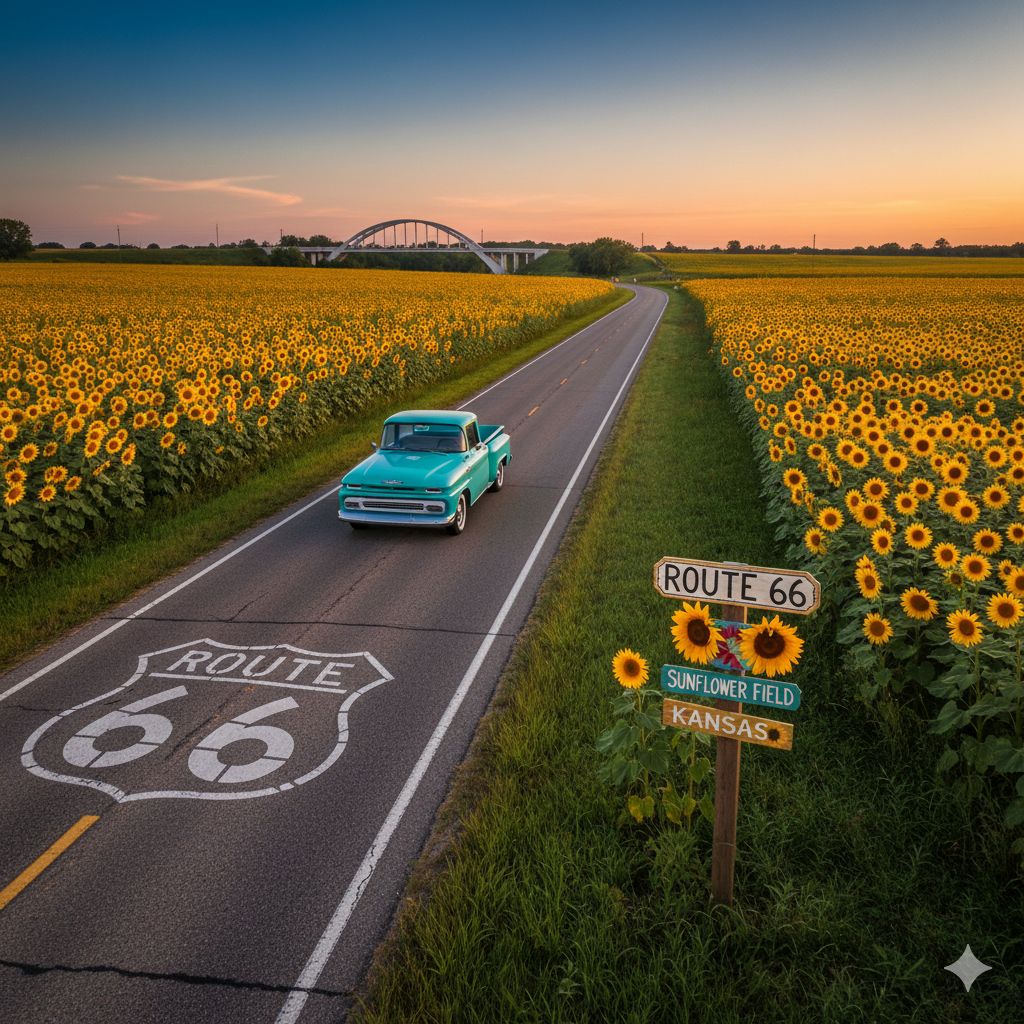
Long before Route 66 was officially designated, its path existed as a patchwork of Native American trails, wagon roads, and early automobile routes. These pathways connected farming towns, mining camps, and frontier settlements across the Midwest and Southwest.
As automobiles became common in the early 20th century, the lack of a standardized system created demand for a unified road network. Businessman Cyrus Avery of Tulsa, Oklahoma, became a leading advocate for a transcontinental route that would benefit the heartland.

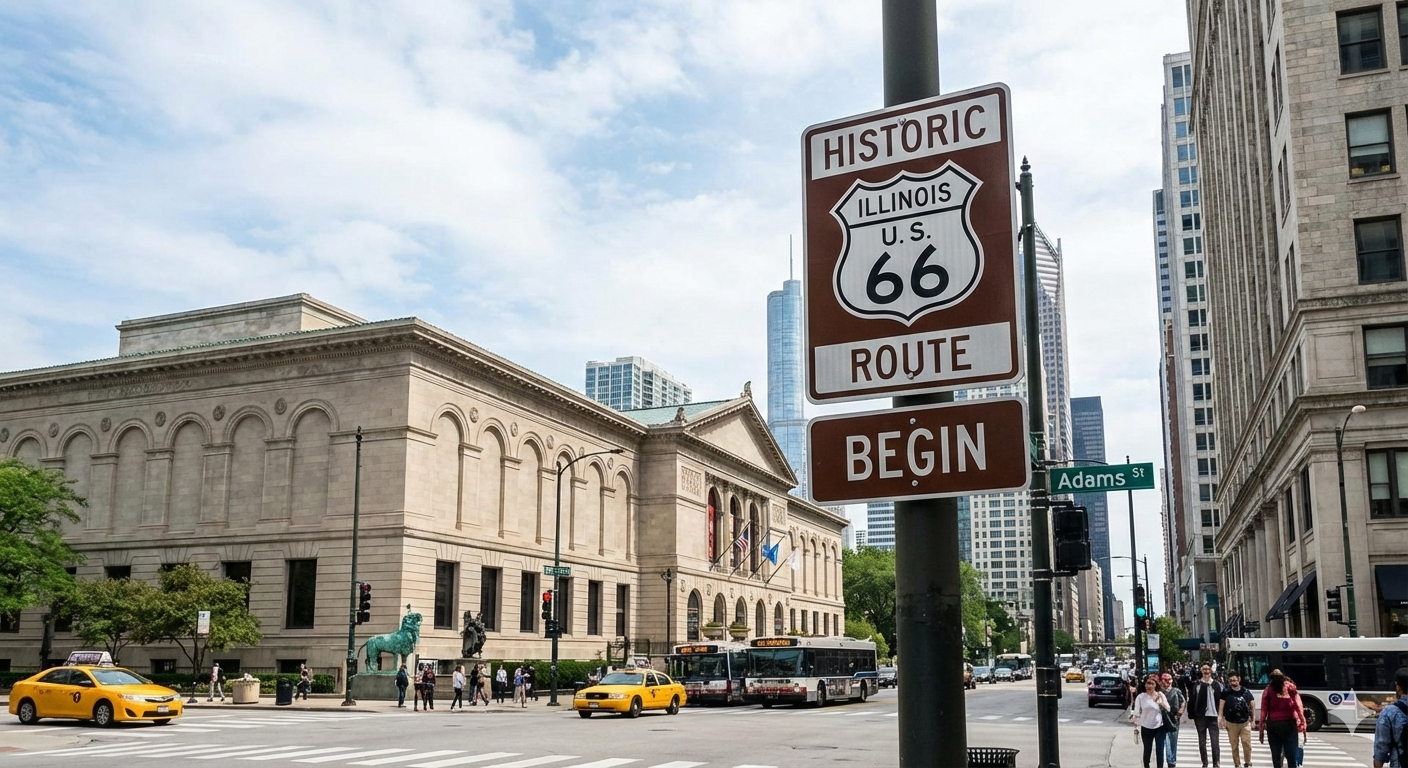
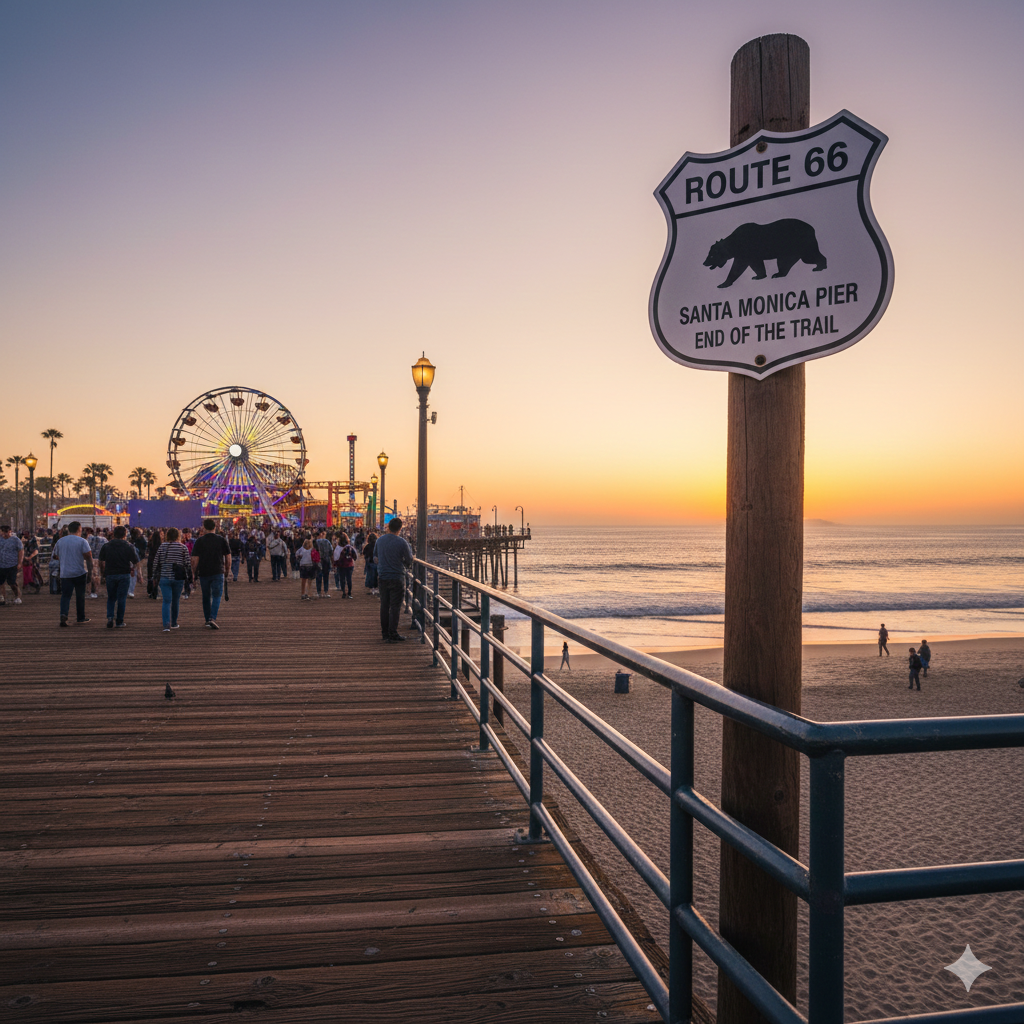
On this day, Route 66 was officially established as part of the new U.S. Highway System, stretching approximately 2,448 miles from Chicago to Santa Monica.
The Mother Road & Migration
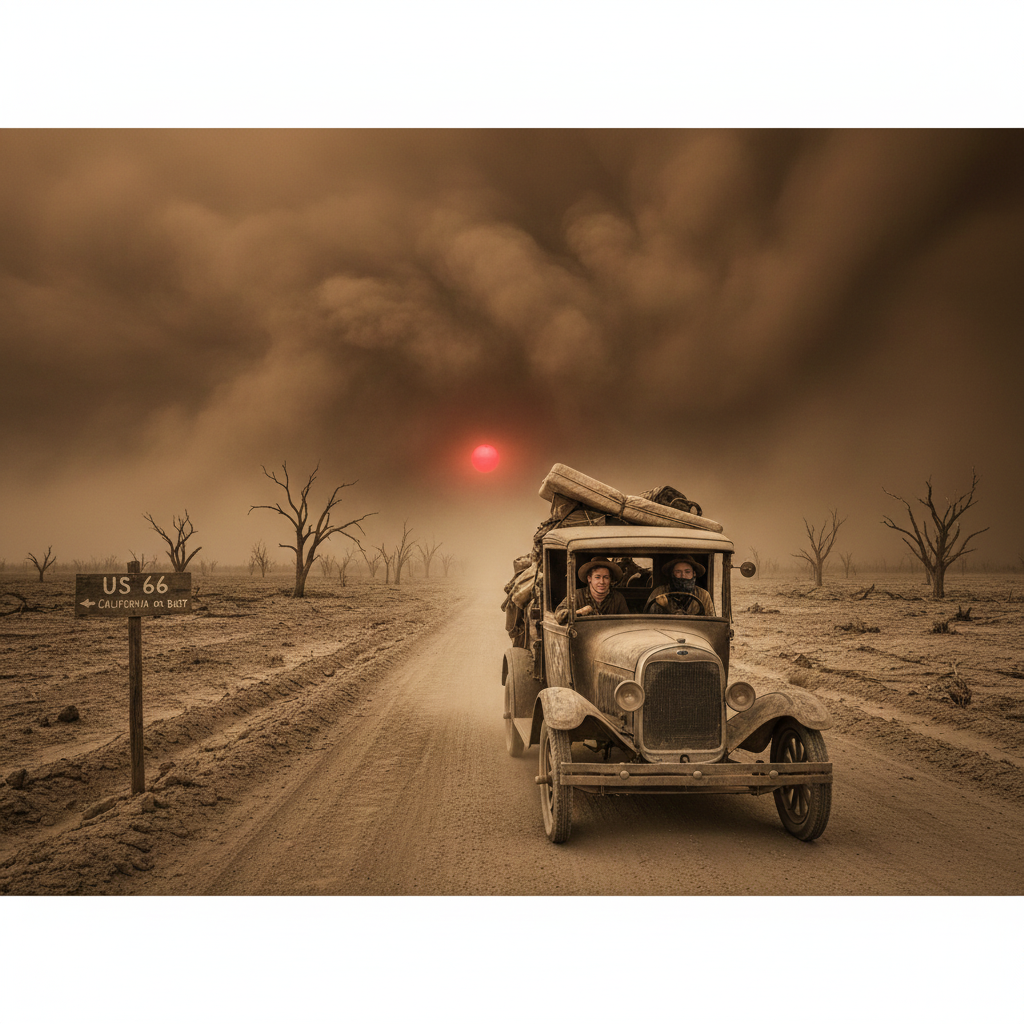
In 1938, Route 66 became the first fully paved U.S. highway. During the Great Depression, severe droughts devastated the Great Plains, leading hundreds of thousands of displaced families west seeking survival.
“Route 66 is the main migrant road… the road of flight.” — John Steinbeck, The Grapes of Wrath
Steinbeck immortalized the highway, forever linking it to themes of hardship, hope, and perseverance.
The Golden Age (1940s–1950s)
During WWII, the road moved troops and supplies efficiently. Post-war, automobile ownership soared and the "road trip" was born. Neon signs and novelty architecture blossomed along the route.
- Motels replaced roadside cabins
- Diners & Drive-ins became icons
- "Get Your Kicks on Route 66"
Decline & Revival
The Interstate Highway Act of 1956 launched the bypass of Route 66 towns. In 1985, the highway was officially decommissioned. However, preservation groups soon formed to save the "Living Museum."
Today, more than 85% of the original road remains drivable, serving as a testament to 20th-century America.